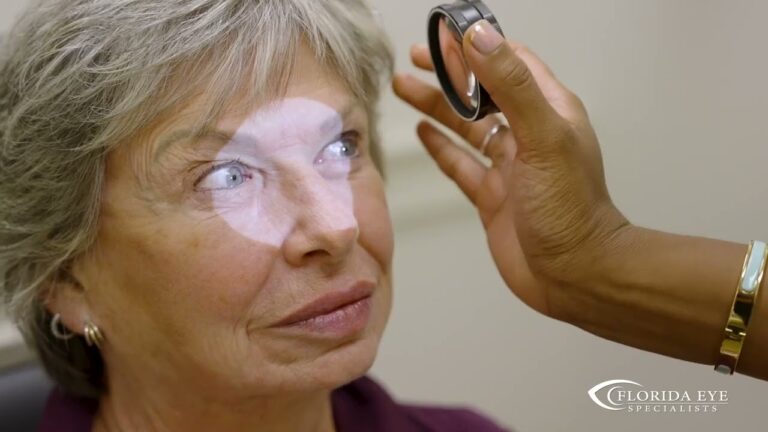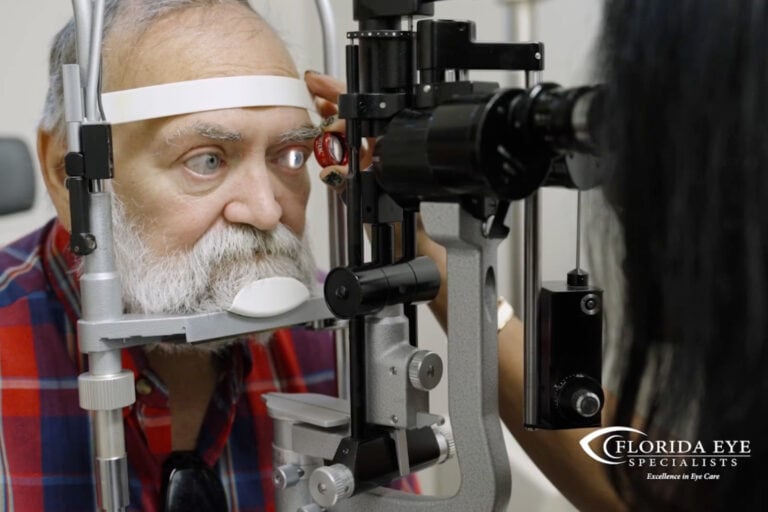
Diabetic eye disease is one of the leading causes of blindness in adults. In this educational video, Dr. McGregor Lott, retinal specialist at Florida Eye Specialists, discusses how diabetes affects the retina and the importance of regular dilated eye exams.
Viewers will learn how high blood sugar levels can damage the tiny blood vessels in the retina, leading to diabetic retinopathy, macular edema, or even retinal detachment. Dr. Lott explains early symptoms to watch for — such as blurred vision or floaters — and treatment options ranging from monitoring to laser therapy and injections.
Florida Eye Specialists offers state-of-the-art care for diabetic eye conditions and works closely with primary care physicians and endocrinologists to protect your vision.
Video Transcript
Diabetes causes changes in blood vessels all over the body, and in the eye, the retina is particularly vulnerable to that. You get these changes in the blood vessels, and that can lead to bleeding or swelling, which then leads to vision loss. Patients can prevent that from happening by tightly controlling their blood sugar, but that damage often develops silently, which means it can become quite advanced without the patient even realizing it. So it’s really important, if you are a diabetic, to get at least an annual eye exam. It tends to be somewhat time-dependent, meaning the longer you have diabetes, the more likely you are to get it — but it’s also more than that, depending on how well you’ve controlled your blood sugar. The more poorly it’s controlled, the more likely, over time, you’re going to get some of these areas of damage in the eye. And a lot of times it gets quite advanced before the person starts to suffer vision loss, so they may not realize there’s a problem. It’s one of those diseases where you want to intervene early on to get the best outcome.