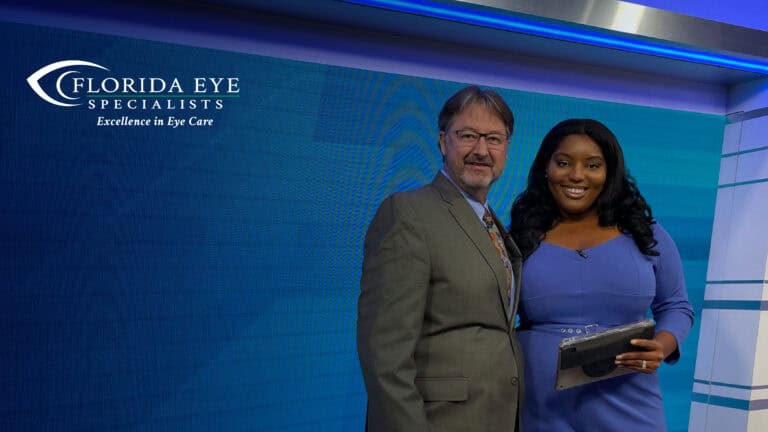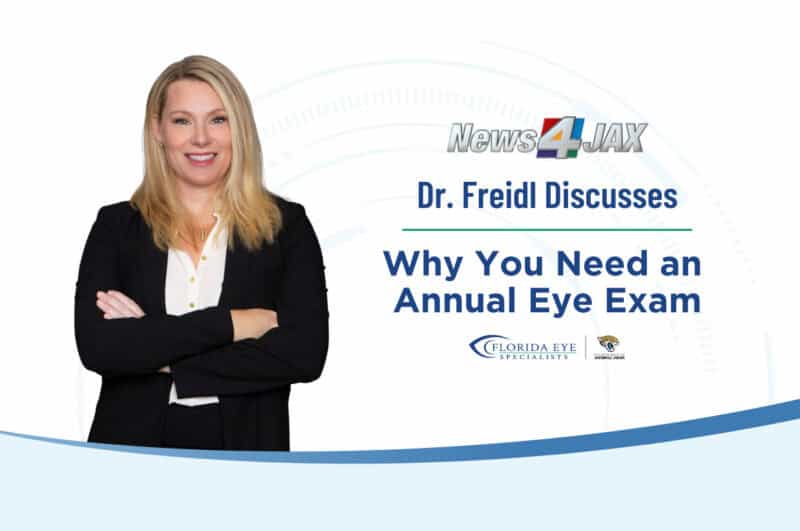
Dr. Kathryn Freidl, a board-certified ophthalmologist at Florida Eye Specialists, is an expert in cataract and glaucoma surgery. She is one of the first trained minimally-invasive glaucoma surgeons in Jacksonville.
Dr. Freidl sat down with local TV news station News4Jax to raise awareness about glaucoma and promote a day of free vision screenings in honor of World Sight Day, which was celebrated on October 13.
Watch the full TV news clip or click the link below to hear from Dr. Freidl and learn about the importance of regular eye exams to catch diseases like glaucoma in their earliest stages.
Read the full story on News4Jax.com.
Video Transcript
About three million Americans have glaucoma, according to the CDC, and since there are often no early symptoms, 50% don’t even know they have it. That’s why, in honor of World Sight Day, local doctors are giving free glaucoma screenings tomorrow. News4Jax reporter Aaron Ferrar is live. Glaucoma is the leading cause of blindness worldwide, and doctors at Florida Eye Specialists say that’s why annual eye exams are important, because any sight that is lost because of the disease, patients won’t be able to get back.
It’s been 15 years of Craig Donovan getting treated for glaucoma. Although he was dealing with other eye issues, he says there were warning signs of the disease. ‘When the pressure goes up, I do get headaches, specifically on the right side of my head, and I can tend to get blurriness that I didn’t have before.’ Donovan believes he was fortunate to experience symptoms — that’s not the case for everyone, because it can be silent. Ophthalmologists with Florida Eye Specialists are offering a day of free glaucoma vision screenings on Thursday. Dr. Kathryn Freidl hopes they can catch the disease quickly in some patients, or outright prevent it in others. ‘An ounce of prevention is a pound of cure.’
Glaucoma is an eye disease that causes damage to the optic nerve that connects the eye to the brain, and it can lead to irreversible blindness. Anyone can get glaucoma, but some are at higher risk of being diagnosed, including those 40 and older, anyone with a family history of glaucoma, those of African American, Asian, or Hispanic descent, and people with diabetes and high blood pressure. ‘It’s something that I didn’t expect, and people take their eyes for granted. I know thousands of people who would give anything to be able to rewind the clock and intervene just a little bit sooner.’ These free tests could be a difference maker. If you’d like a free screening tomorrow, you can’t just show up or walk in — you have to call and make an appointment.