Twenty percent of cataracts are caused by overexposure to UV radiation. As National Cataract Awareness Month takes off, it is important to be aware of the negative ways that UV rays affect our eyes.
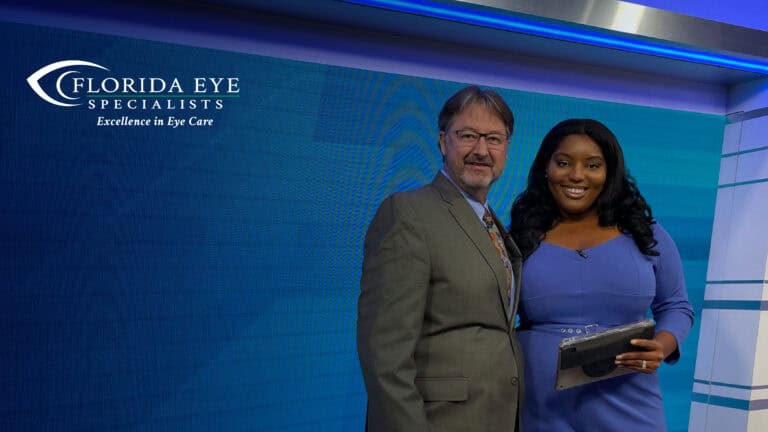
Dr. Kimberly Riordan, an optometrist at Florida Eye Specialists, sat down with TV news station News4Jax to discuss how the sun can damage eyes and the signs that you may be developing cataracts. She also explained what steps you can take to protect your eyes during the intense summer months.
Watch the full TV news clip or click the link below to hear from Dr. Riordan.
Read the full story on News4Jax.
Video Transcript
As the Florida and Georgia summer heats up, UV rays can put your eyes at risk. The World Health Organization estimates 20% of cataracts across the world may be caused by overexposure to UV radiation. As we recognize National Cataract Awareness Month, Jacksonville optometrist Dr. Kimberly Riordan, with Florida Eye Specialists, joins us to talk about lowering your risk. Good morning. Thank you for having me.
We are out and about, with those long days — the sun is up early and sets really late, so that means a lot of exposure to sunshine. Let’s talk about UV rays and how they affect our eyes. The UV is strong here in Florida, and we’re jumping into the summer months. I actually have an eye model here to help demonstrate. One of the things we want to protect the eyes with is our sunglasses, because there are many ways sunlight can penetrate from the front of the eye all the way to the back. The first thing we think of is our eyelids: skin cancer is very common along the eyelids, and it’s hard to appropriately put sunscreen there, so that’s a common place where we can get skin cancer. Another place we worry about is the front surface of the eye: the white is covered by conjunctiva, and that tissue can be affected by UV rays, most specifically UVB. That can degenerate and cause what we call a pinguecula, and those can grow over the cornea, that clear covering, and cause pterygiums. Those are usually benign; however, we worry about cancer developing on the front of the eye as well. So if you notice a new spot on the surface of the eyelid or the eyeball, call your eye doctor or Florida Eye Specialists. Moving into the front of the eye, we worry about cataracts forming: the eye is like a camera, it has a lens, and that lens can get cloudy over time. UV exposure accelerates the rate of cataract growth, and it can even penetrate all the way to the back of the eye, to the retina, where we worry about things like macular degeneration.
What are the signs of a cataract? Most people will experience blurry or cloudy vision; they may notice double vision out of one eye, that colors aren’t as distinct as they used to be, or that they’re changing their glasses or contact lens prescription a lot more than they used to.
We hear about cataracts in older people — what about younger people? When we think of cataracts, we often think it’s just older adults, which is true — we see it more commonly in those 65 and older. However, we can be born with them (congenital cataracts), and we can develop them at any point in life for various reasons. The top three most common are trauma (traumatic cataracts if we’re hit in the eye), certain medications (corticosteroids are known to create a more aggressive type that can grow more quickly than an age-related one), and underlying health conditions such as diabetes or high blood pressure.
What are the simple things we can do to protect our eyes? Prevention is key: sunglasses, especially wrap-around sunglasses, because light can still creep in at an angle; also wear wide-brimmed hats, wear your sunscreen, and if you’re going swimming, have your goggles. Very important, especially for us down here in Florida and Georgia. Whether you’re at the pool, the lake, the river, or the beach, there is sun all around us, so protect yourself. Dr. Kimberly Riordan, thank you so much for coming on.